
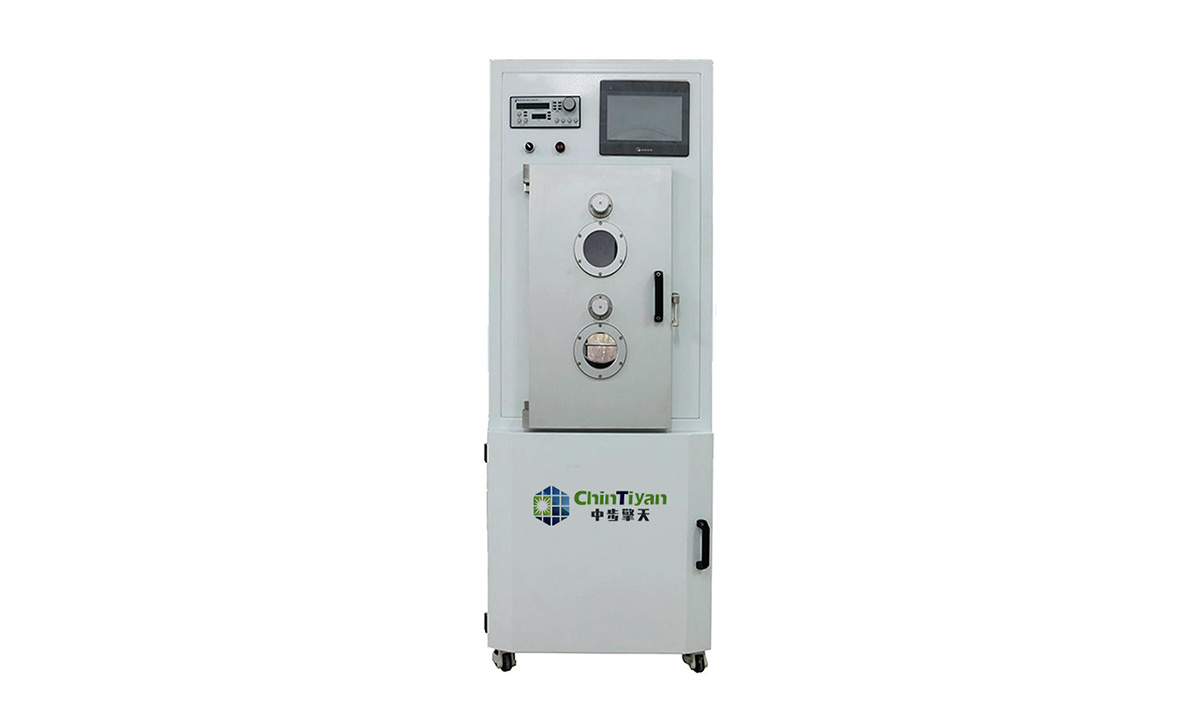
Butyl Rubber Coating Machine
Classification:
The coating equipment supports glass in tempered, semi-tempered, or non-tempered states. Cycle time is under 16 seconds; driven by linear motors, it achieves a repeatability of ±0.02 mm and supports a glue application width of 5–8 mm (with ±0.3 mm precision). Compatible with glass thicknesses ranging from 1.6 mm to 3.2 mm.
Contact:
Details Introduction
The Butyl Rubber Coating Machine is an automated sealing system designed for edge sealing of perovskite solar modules. It applies butyl sealant evenly along the module edges to support reliable sealing and improve protection against moisture and external environmental factors. The machine accommodates module sizes from 1700–2400 mm in length and 1100–1350 mm in width, providing flexible processing for different perovskite module specifications.
The butyl sealant coating machine integrates PLC control, servo drive systems, and machine vision to automate the complete coating process from glass module loading to finished module discharge. Automated positioning and controlled sealant application help maintain consistent coating quality and process accuracy while reducing manual intervention. The equipment is suitable for perovskite solar module production lines requiring stable, repeatable, and efficient edge sealing processes.
Parameter
Description


Production Strength


What Production Capacity Can a 300–400MW Solar Panel Production Line Achieve?
A 300–400MW solar panel production line is designed for manufacturers targeting large-scale module production with a high level of automation. The actual annual output depends on factors such as module power, production hours, equipment cycle time, and line utilization. A properly balanced full-automatic line helps maintain stable throughput across stringing, layup, lamination, framing, and testing, making it suitable for continuous high-volume solar panel manufacturing.
What Should Be Considered When Building a 1GW Solar Panel Assembly Line?
A 1GW solar panel assembly line requires careful planning of production capacity, equipment configuration, factory layout, material flow, and process coordination. At this scale, individual machines must be matched to the overall line capacity to avoid bottlenecks between processes such as stringing, layup, lamination, framing, and testing. Production scheduling, automation level, and future expansion should also be considered when designing a 1GW solar module manufacturing facility.
How to Plan a 500–750MW Solar Panel Production Line?
Planning a 500–750MW solar panel production line requires more than simply increasing the number of machines. Manufacturers need to consider production flow, equipment capacity, material handling, factory layout, testing requirements, and coordination between automated processes. A properly planned line helps maintain balanced throughput across each stage and provides the production capacity needed for large-scale solar module manufacturing.
Why Choose a Full-Automatic Solar Panel Production Line for 60–200MW Capacity?
A 300–400MW solar panel production line is designed for high-volume solar module manufacturing where production efficiency and stable operation are key considerations. A high level of automation helps coordinate material handling and core processes, reducing manual intervention between production stages. The line can also be configured around different module technologies and production requirements to support continuous, large-scale manufacturing.
Contact us
Address: 5 Xingfu Road, Miaoshan Development Zone, Jiangxia District, Wuhan City, Hubei Province, China
Scan QR Code by WhatsApp