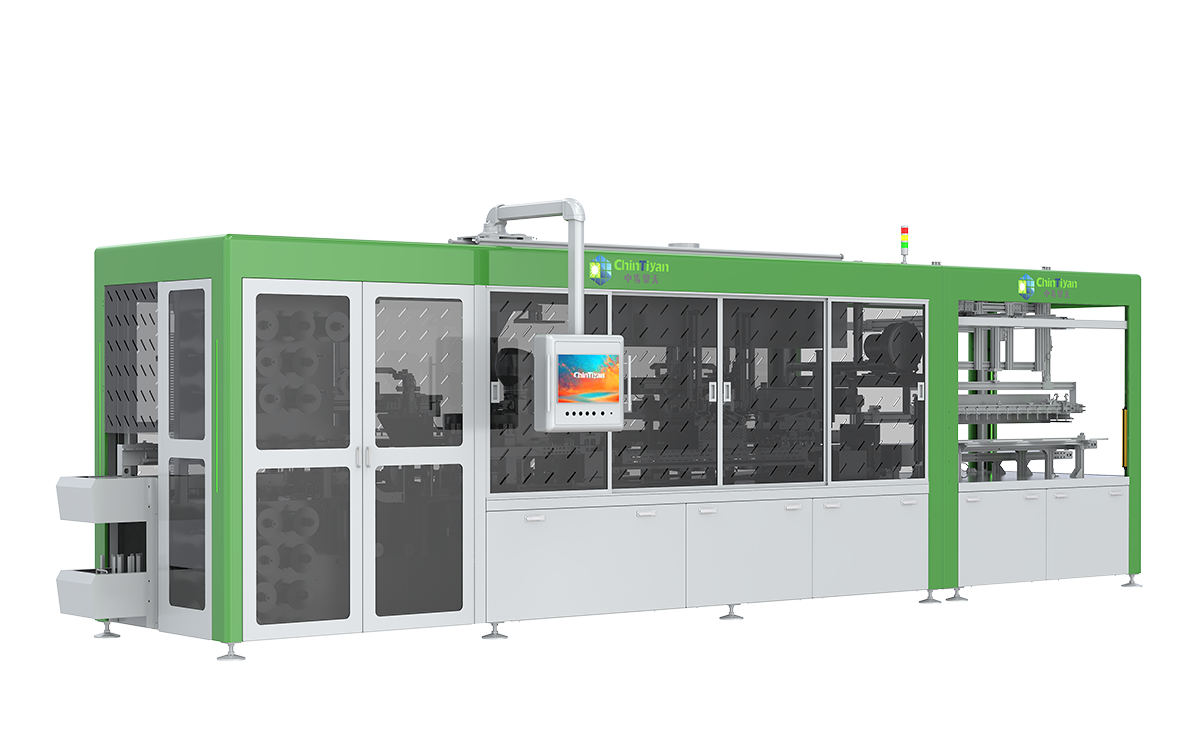
Auto Layup and Bussing Machine
Model:CT-J-HLH-00 1.Beat>6S/string. 2.Auxiliary string loading. 3.Can be customized.
Contact:
Details Introduction
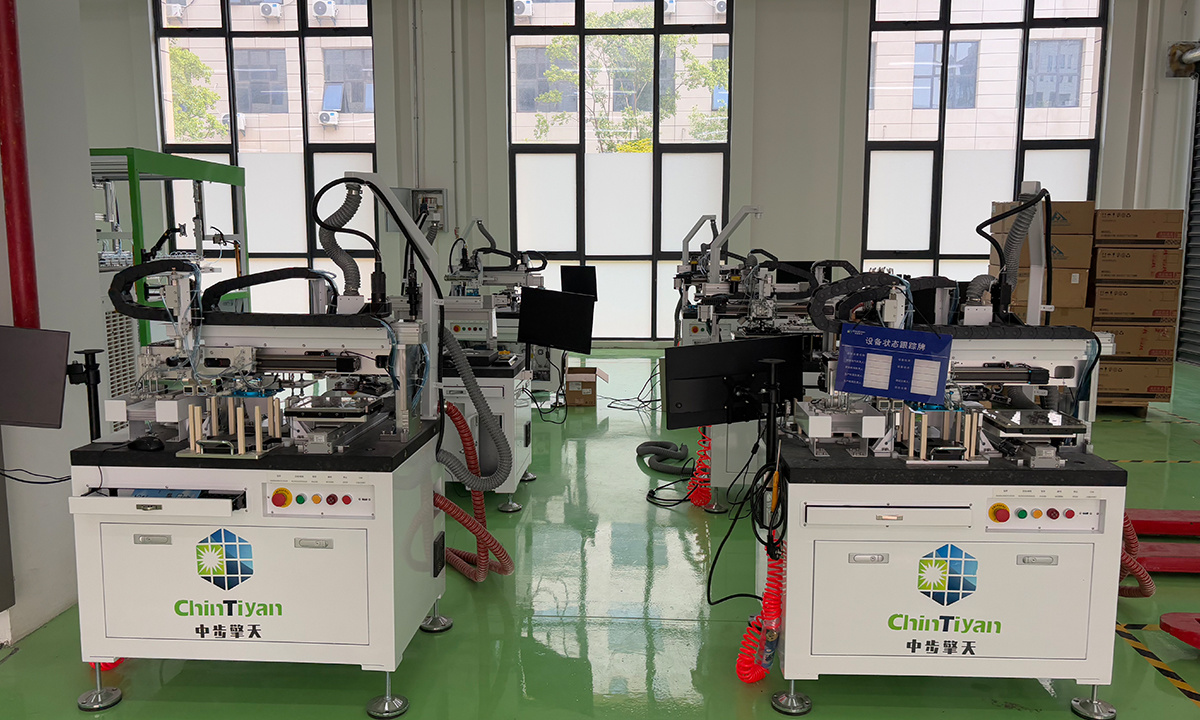
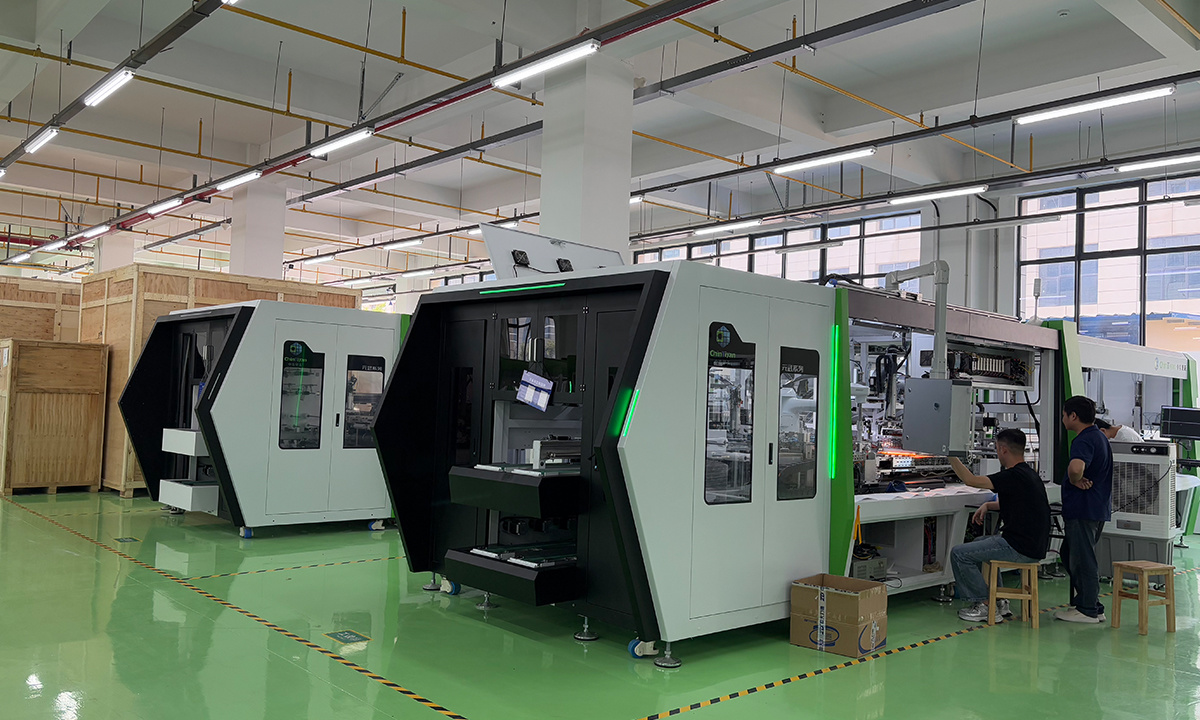
CT-J-HLH-00 Automatic Layup and Bussing Machine is designed for small and medium-sized module factory work mode design,occupies a small area of plate machine and welding convergence of one of the equipment,integrated with motion control cards,sensors,servo,welding head,linear module, rack and pinion module and other advanced automation technology,to achieve from the string of batter-ies on the material to the plate,exclude the corresponding plate,the string of batteries convergence of the full-automatic processing,the plate can be customized,the beat>6S/string.
Parameter
| Auxiliary string loading. |
Three-axis module and vacuum suction cups moving the strings to alignment and tabbing positions. |
|
Cylinder alignment with laser sensors for positioning via front and rear screw modules. |
Full platform tabbing with adsorption to ensure precise string positioning for the next station. |
|
Three Busbar Auto layup and bussing stations with fast bending,maintaining a ready state. |
Six welding heads operating simultaneously, to ensure efficient welding cycles. |
Keyword:
Auto Layup and Bussing Machine
Production Strength


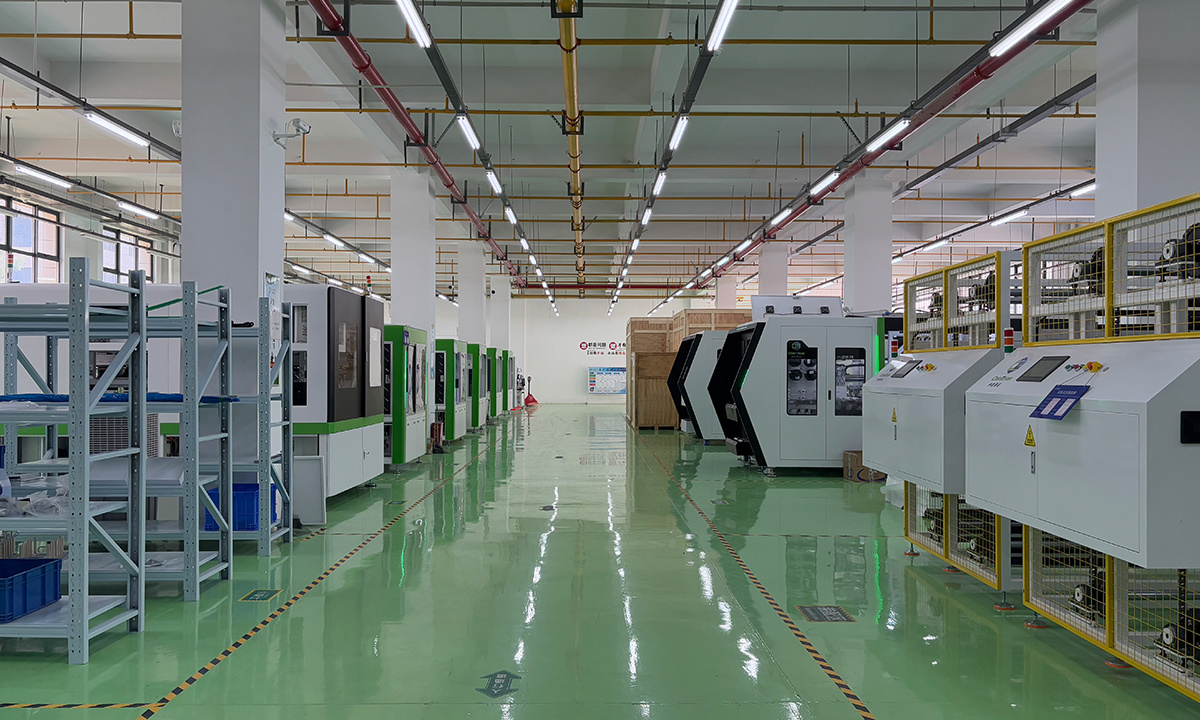

What Are Photovoltaic Panels Made of?
A photovoltaic solar panel is a laminated assembly of five essential layers: the front is high-transmittance tempered glass, followed by an encapsulant layer (typically EVA or POE) that bonds and protects, then the solar cells which generate electricity, another encapsulant layer, and finally a backsheet that seals the rear surface. For bifacial modules, the backsheet is replaced with transparent glass or fluoropolymer film to capture energy from both sides. The entire stack is fused together under heat and vacuum in solar panel laminator—a critical stage in the pv panel manufacturing process, then framed with anodized aluminum and fitted with a junction box.
Is BC technology the Future?
BC (Back Contact) technology is undoubtedly a key direction for next-generation high-efficiency PV modules. Its busbar-free front side offers not only superior aesthetics but also significantly reduces shading, leading to higher light absorption and increased power output. Rather than simply declaring BC as the only future,In fact, BC is a platform technology that can be combined with techniques such as Topcon HJT and perovskite tandem cells to squeeze out the last drop of efficiency gains.
Therefore, we believe BC technology will remain at the forefront of the upcoming technological transformation, making now the opportune moment to invest in BC.
Why We Say "NO" to Fast Quotes ?
Whilst we offer some of the most competitive pricing in the industry, we firmly believe that a well-designed production line holds far greater value than the mere pursuit of low cost. A single quotation cannot suit all. Only after gathering the necessary information and undertaking a bespoke design tailored to each product's characteristics and process requirements can we provide a quotation truly worthy of discussion.
What Information is Required to Establish a Production Line?
This is straightforward.
Firstly, we need to understand the type of modules you wish to manufacture: conventional or flexible, large-format or small-format, and whether any specialised processes are required. Secondly, we require details of your production line capacity requirements – be it a 50MW manual solar panel production line or a 2GW fully automated dark factory.
Finally, if you have already constructed a facility for your project, we need to know the dimensions of the building; a CAD file would be most helpful if available. Naturally, should you be unfamiliar with photovoltaic module manufacturing, there is no need for concern. We shall recommend the most suitable solar panel production line design based on your market requirements.
Related Products



Contact us
Address: 5 Xingfu Road, Miaoshan Development Zone, Jiangxia District, Wuhan City, Hubei Province, China
Scan QR Code by WhatsApp