High-Speed Stringer
Classification:
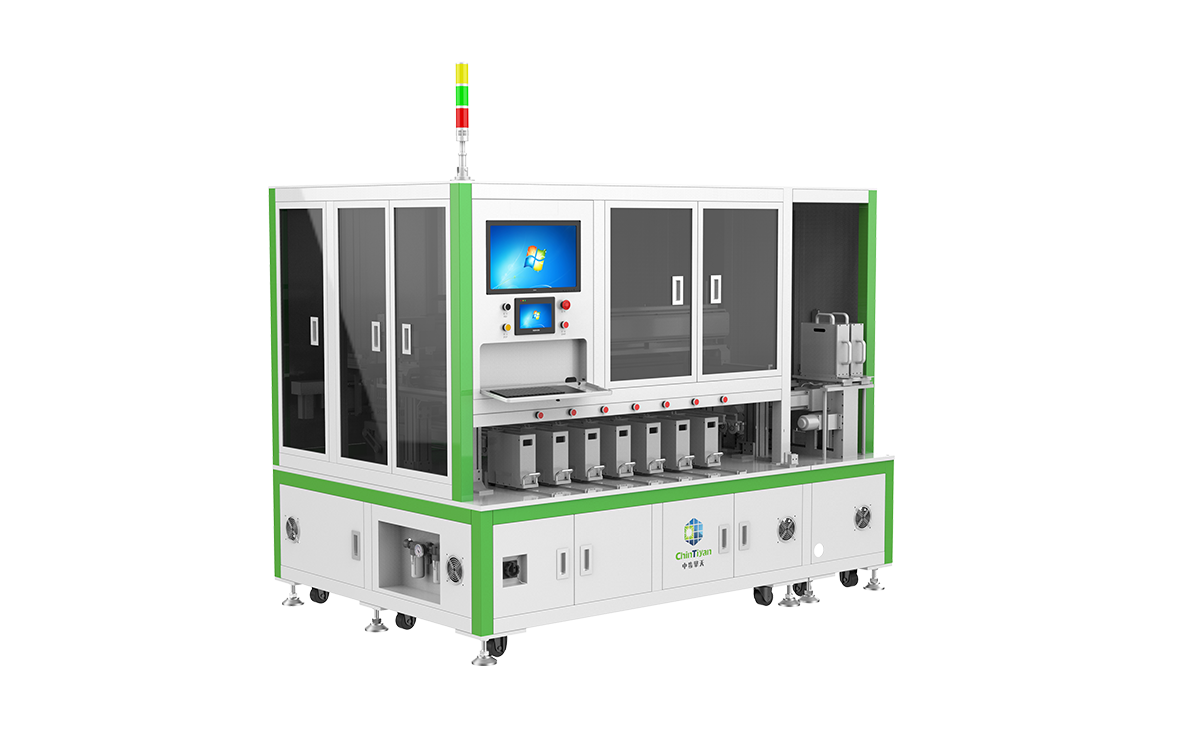
1. Capacity:Half-cell>6000 PCS/H. 2. Compatible with166~230 BC solar cells. 3. Uses high-precision industrial cameras for cell detection. 4.Capable of welding cells with 3BB to 20BB upgradable to 25BB. 5.Precise positioning with a repeat accuracy of ±0.01mm.
Contact:
Details Introduction
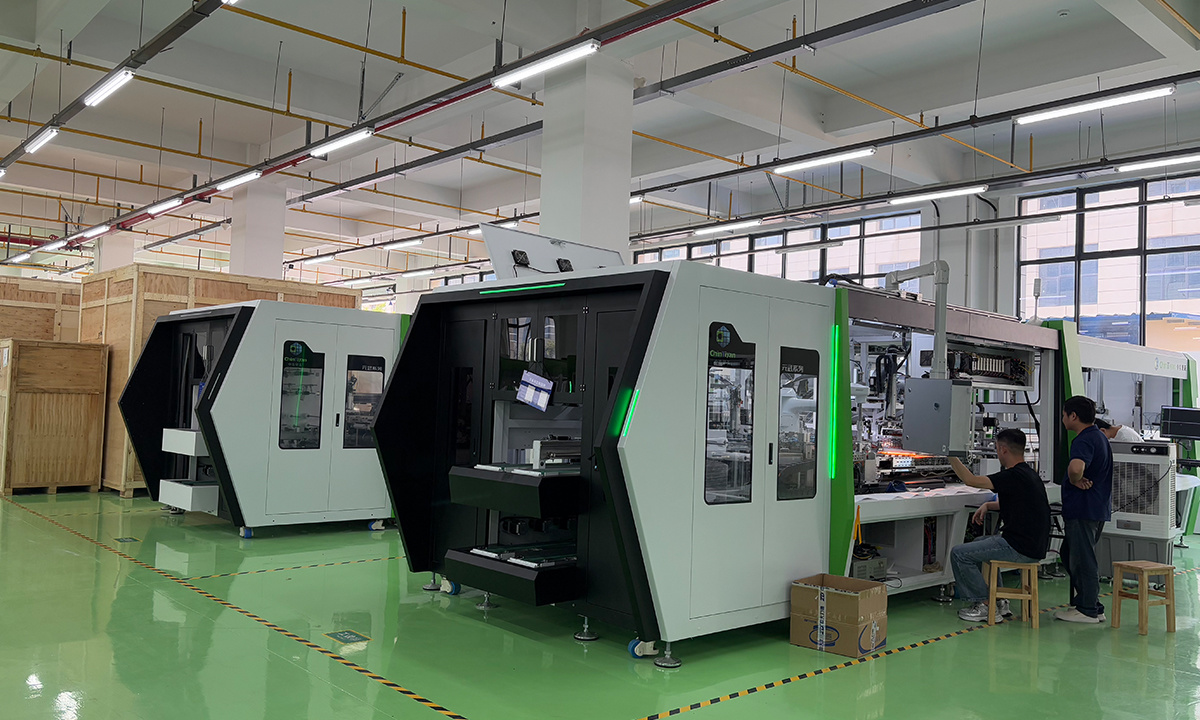
The CTM-60BC High-Speed BC Stringer is an automated production equipment specifically de-signed for BC cell stringing,compatible with 166-230(3BB-20BB)cells.It can produce BC cell strings in sizes 166-230(half-cell,1/3-cell).The equipment utilizes advanced automation technologies including PLC,servo motors,linear motors,four-axis industrial robots,and machine vision to achieve fully automat-ed processing from cell loading to cell string output.
Parameter
Equipment Specifications
| Model | BC High-Speed Stringer CTM-60BC | ||||||||
| Utilization Rate | ≥98% | ||||||||
| Capacity | 10BB half-cell ≥6000 PCS/H | ||||||||
| Breakage Rate | Monocrystalline ≤0.25%for 156mm-230mm solar cells | ||||||||
| Detection | CCD | ||||||||
| Flux Application | Solder ribbon dipping | ||||||||
| Welding Method | Infrared welding | ||||||||
| Compatible Cell Types |
Mainstream BC cells,customizable to be compatible with polycrystalline,monocrystalline PERC, TOPCon,HJT and SMBB high-capacity cells(require to change toling and fixture.) |
||||||||
| Dimensions | 166-230mm crystalline silicon cells and corresponding half-cells | ||||||||
| Number of Grid Lines | 3BB-20BB | ||||||||
| Cell Thickness | 110-230μm | ||||||||
| Max String Length | Up to 1400mm per string(other length can be customized) | ||||||||
| String Defect Rate | ≤2% | ||||||||
| Power Supply | Three-phase 380V,50Hz,five-wire system (L1/L2/L3/N/PE) | ||||||||
| Power | Rated Power:60kW;Operating Power:40kW | ||||||||
| Air Supply Requirements |
Air pressure:0.6~0.7Mpa,compressed air flow:2400 L/min,filtration precision:<40μm, main air inlet:中16mm hose |
||||||||
|
Compressed Air Quality:Maximum solid particles:15μm (level 3),minimum pressure dew point:+3°C(level 4), |
|||||||||
| maximum oil mist concentration:5mg/m³(level 4) | |||||||||
| Alignment Method | Main Busbar+edge detection | ||||||||
| Positioning Accuracy | ±15μm | ||||||||
| Defect Detection Accuracy |
Main Busbar misalignment,corner defects,edge defects,cracks,dirt,90°flipping, 180°flipping,other objects (precision range:0.2mm*0.2mm) |
||||||||
| CCD Parameter Setting Permissions |
Requires dynamic management password permissions,adds strong prompt function for CCD photography (prevents automatic operation after disabling photography function) |
||||||||
Keyword:
High-Speed Stringer
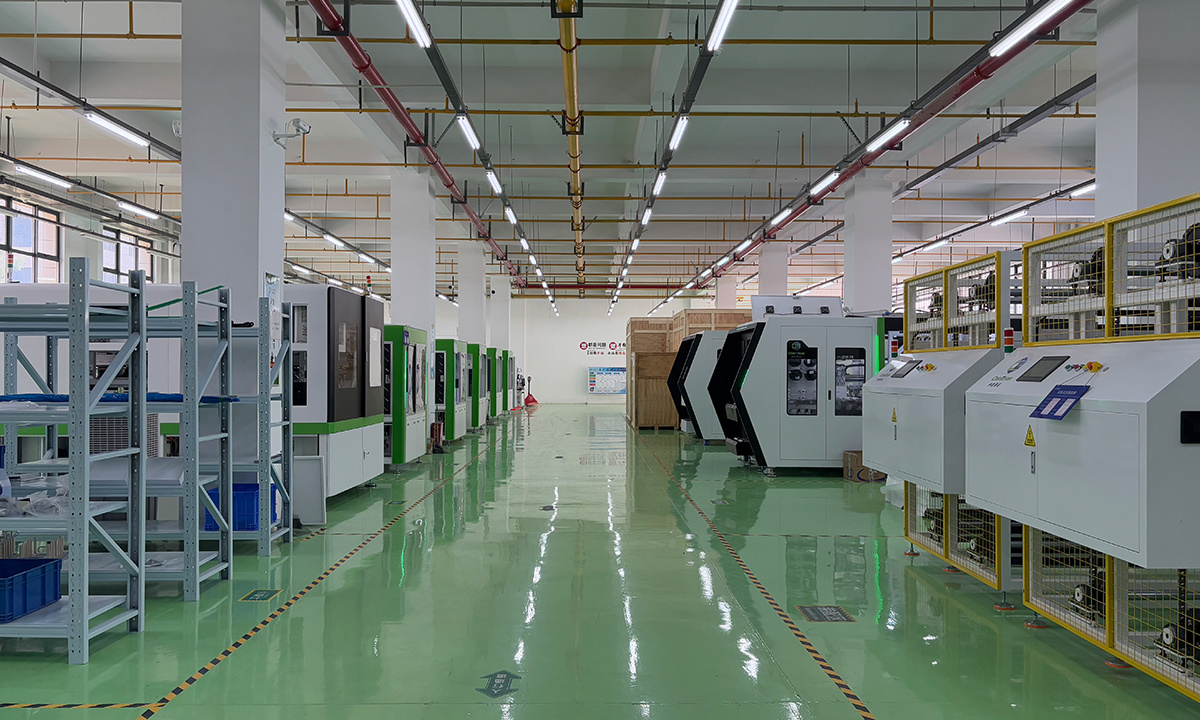
Production Strength



Is BC technology the Future?
BC (Back Contact) technology is undoubtedly a key direction for next-generation high-efficiency PV modules. Its busbar-free front side offers not only superior aesthetics but also significantly reduces shading, leading to higher light absorption and increased power output. Rather than simply declaring BC as the only future,In fact, BC is a platform technology that can be combined with techniques such as Topcon HJT and perovskite tandem cells to squeeze out the last drop of efficiency gains.
Therefore, we believe BC technology will remain at the forefront of the upcoming technological transformation, making now the opportune moment to invest in BC.
Why We Say "NO" to Fast Quotes ?
Whilst we offer some of the most competitive pricing in the industry, we firmly believe that a well-designed production line holds far greater value than the mere pursuit of low cost. A single quotation cannot suit all. Only after gathering the necessary information and undertaking a bespoke design tailored to each product's characteristics and process requirements can we provide a quotation truly worthy of discussion.
What Information is Required to Establish a Production Line?
This is straightforward.
Firstly, we need to understand the type of modules you wish to manufacture: conventional or flexible, large-format or small-format, and whether any specialised processes are required. Secondly, we require details of your production line capacity requirements – be it a 50MW manual line or a 2GW fully automated dark factory.
Finally, if you have already constructed a facility for your project, we need to know the dimensions of the building; a CAD file would be most helpful if available. Naturally, should you be unfamiliar with photovoltaic module manufacturing, there is no need for concern. We shall recommend the most suitable production line design based on your market requirements.
What is Our Collaboration Process?
We consider after-sales service the beginning of a long-term partnership, not the end of a transaction. We provide a full-spectrum "service ecosystem" that covers the entire journey from initial discussion to stable mass production.
1.Collaboration and Delivery Process
Requirement Confirmation & Technical Discussion: We start with in-depth communication to clarify product specifications, capacity goals, and technical requirements, providing a preliminary technical solution.
2.Plan Finalization & Contract Signing: Upon reaching a technical consensus, we proceed to draft and sign the commercial contract and technical agreement.
3.Production Line Construction & Equipment Manufacturing: In parallel, you can proceed with plant construction/renovation, utility preparation, and team building. We simultaneously conduct lean manufacturing and assembly of the equipment.
4.Factory Acceptance Test (FAT): After assembly and debugging, we warmly welcome you to our facility for a pre-acceptance test to verify equipment performance firsthand.
5.Maritime Logistics & On-site Installation: Following FAT, equipment is shipped via maritime logistics to your plant. Our engineer team will be on-site to guide installation and positioning.
6.Commissioning & Site Acceptance (SAT): After installation, our engineers perform precise commissioning and complete the final Site Acceptance Test, ensuring the line meets all agreed performance metrics.
7.Training & Guided Production: We provide comprehensive operation and maintenance training, and guide you through small-batch trial production to ensure your team can operate the line independently.
8.Long-term Support & Continuous Improvement: Our comprehensive long-term after-sales service begins after mass production, including remote support, spare parts supply, periodic visits, and technical upgrade services, ensuring your sustained production and future growth.
Related Products


Contact us
Address: 5 Xingfu Road, Miaoshan Development Zone, Jiangxia District, Wuhan City, Hubei Province, China
Scan QR Code by WhatsApp