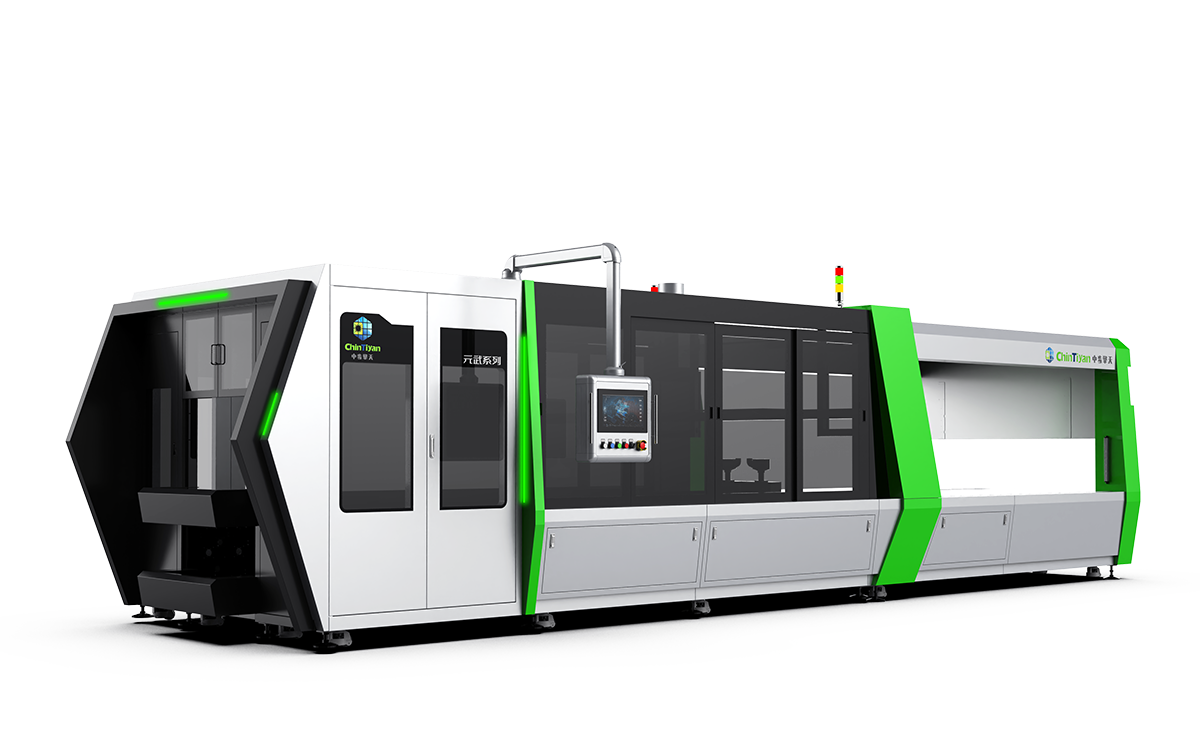
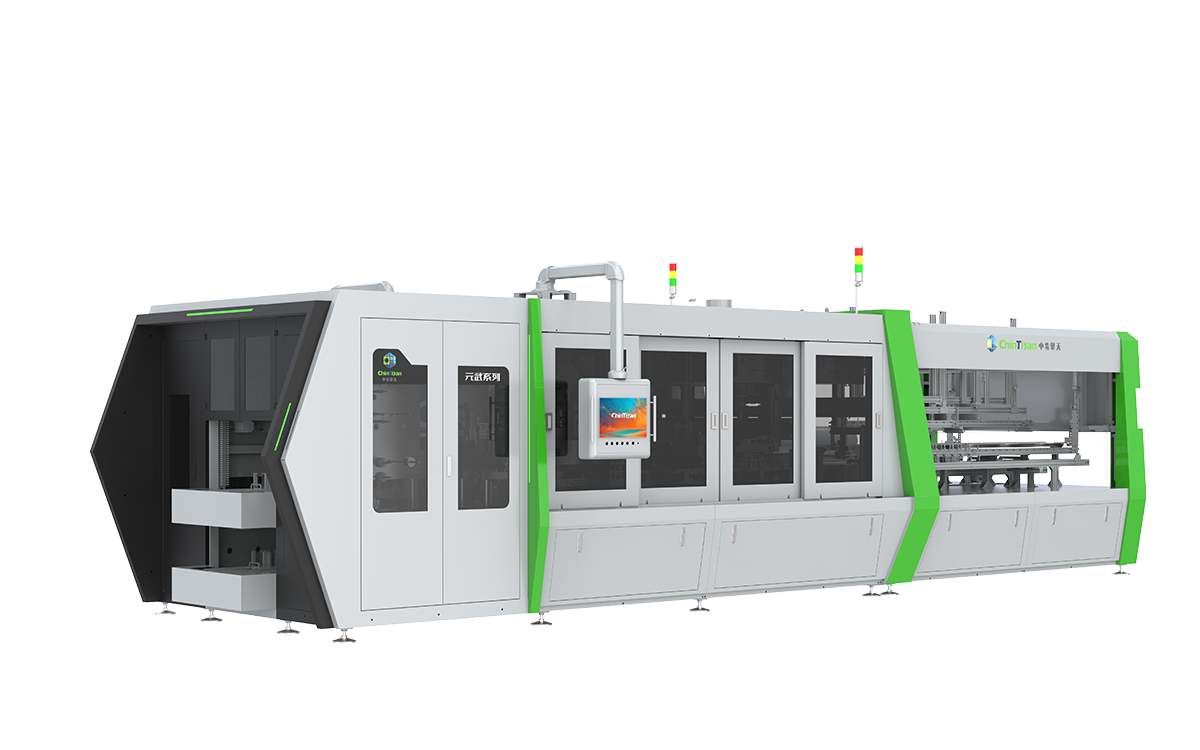
High-Efficiency Solar Stringer Machine
The CTM-20 is designed for stable photovoltaic cell string welding with high compatibility from 3BB to 20BB. It delivers ≥95% uptime and a capacity of 156–210 cells with a welding speed of up to 1,600 pcs/hour.
Contact:
Details Introduction
The CTM-20 high-efficiency solar stringer machine is an automated solar cell stringing solution designed for reliable photovoltaic module production. It supports 156–210mm solar cells with compatibility from 3BB to 20BB, including half-cell and one-third cell configurations.
Equipped with PLC, servo control, and machine vision technologies, the CTM-20 enables fully automated processes from cell loading to string output. With a welding capacity of up to 1,600 pcs/hour for half-cells, ≥95% equipment utilization, and a ≤0.25% breakage rate, it ensures stable operation and consistent welding quality for solar module manufacturers.
Features
✅ Wide Cell Compatibility: Supports 156–210mm solar cells, including half-cell and one-third cell formats, with flexible adaptation from 3BB to 20BB designs.
✅ Reliable Welding Performance: Uses infrared heating welding technology to achieve stable soldering quality and reduce cell damage during stringing.
✅ Intelligent Automation System: Integrates PLC, servo control, and machine vision for precise operation and automatic production management.
✅ Stable Production Output: Designed for continuous photovoltaic cell string welding with high reliability, easy operation, and convenient maintenance.
Parameter
Equipment Parameter
| Equipment Model | CTM20 Stringer |
| Uptime | ≥ 95% |
| Capacity | 166~210 cells: half a piece is more than 1600 pcs/h |
| Breakage Rate | ≤0.25% |
| Inspection System | CCD |
| Flux Application | Welding strip immersion |
| Welding Method | Infrared welding |
| Integrated Positioning Accuracy | Position deviation: ±0.1mm, Angle deviation: ±0.05° |
| Cell Size | 166~210mm cell and corresponding half piece, 1/3 piece of the cell |
| Busbar Count | 3BB-20BB (25BB extensible) |
| Cell Thickness | 170um~200um |
| Maximum String Length | 1400mm |
| Positioning Accuracy | X/Y: ≤±0.1mm, θ: ≤±0.05° |
| Defect Detection | It can detect defects such as corner deficiency, edge collapse, cracking, screen printing skew and displacement |
| Inter-cell Gap | -1mm to 5mm |
| Gap Accuracy | ±0.3mm |
Keyword:
High-Efficiency Solar Stringer Machine
Related Products




How to Choose the Right Stringer Machine?
First, compatibility: it must handle 182mm and 210mm cells with quick changeover. Second, breakage rate and soldering yield, test with your own cells to see real performance. Third, stability and service: the machine should run reliably for long shifts, with fast support when needed. Also check if the stringer machine can be upgraded later for half‑cut, multi‑busbar, or heterojunction processes.
What is the Solar Panel Manufacturing Process?
Cells are loaded by an automatic loader. For half‑cut or third‑cut, cells go through a laser scribing machine for precise splitting. The cells are then fed into a stringer, where ribbons are soldered to form cell strings. After stringing, a bussing machine interconnects the strings, followed by layup, lamination, framing, junction box attachment, and final testing (EL and flash test). The stringer machine and laser scribing machine are the most critical pieces, they determine breakage rate and soldering quality.
How to Calculate Annual Energy Production From Solar Panels?
Simply multiply the total panel power (in kW) by the annual peak sun hours in your location, then apply a system efficiency factor, typically around 80%, to get a rough estimate. But from a manufacturing equipment perspective, what matters just as much is ensuring that processes like stringing and lamination don’t introduce micro‑cracks or poor soldering, because those issues will directly reduce the panel’s actual output.
Is BC technology the Future?
BC (Back Contact) technology is undoubtedly a key direction for next-generation high-efficiency PV modules. Its busbar-free front side offers not only superior aesthetics but also significantly reduces shading, leading to higher light absorption and increased power output. Rather than simply declaring BC as the only future,In fact, BC is a platform technology that can be combined with techniques such as Topcon HJT and perovskite tandem cells to squeeze out the last drop of efficiency gains.
Therefore, we believe BC technology will remain at the forefront of the upcoming technological transformation, making now the opportune moment to invest in BC.

Contact us
Address: 5 Xingfu Road, Miaoshan Development Zone, Jiangxia District, Wuhan City, Hubei Province, China
Scan QR Code by WhatsApp