
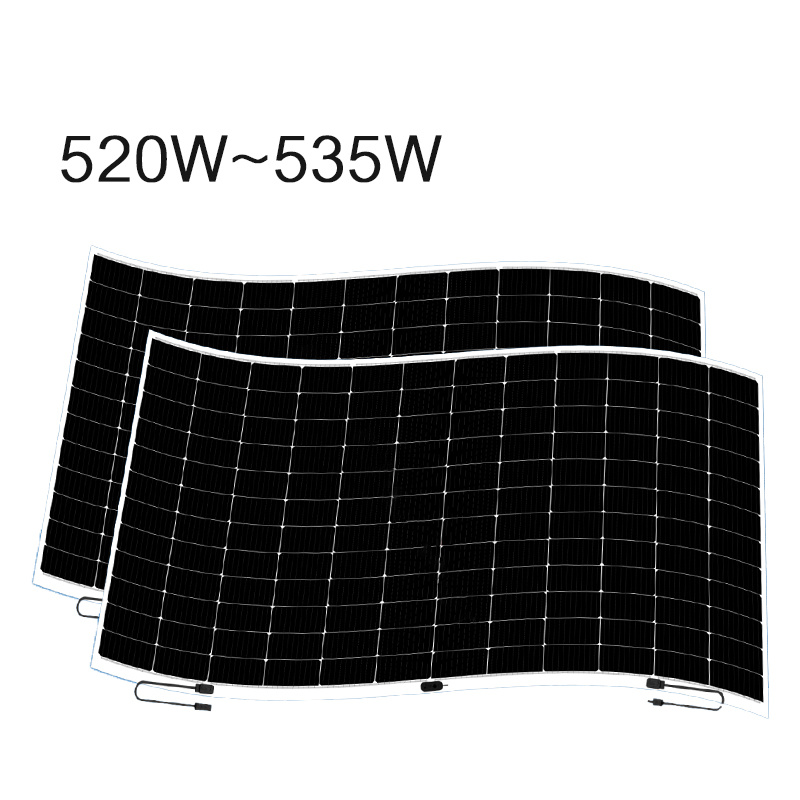
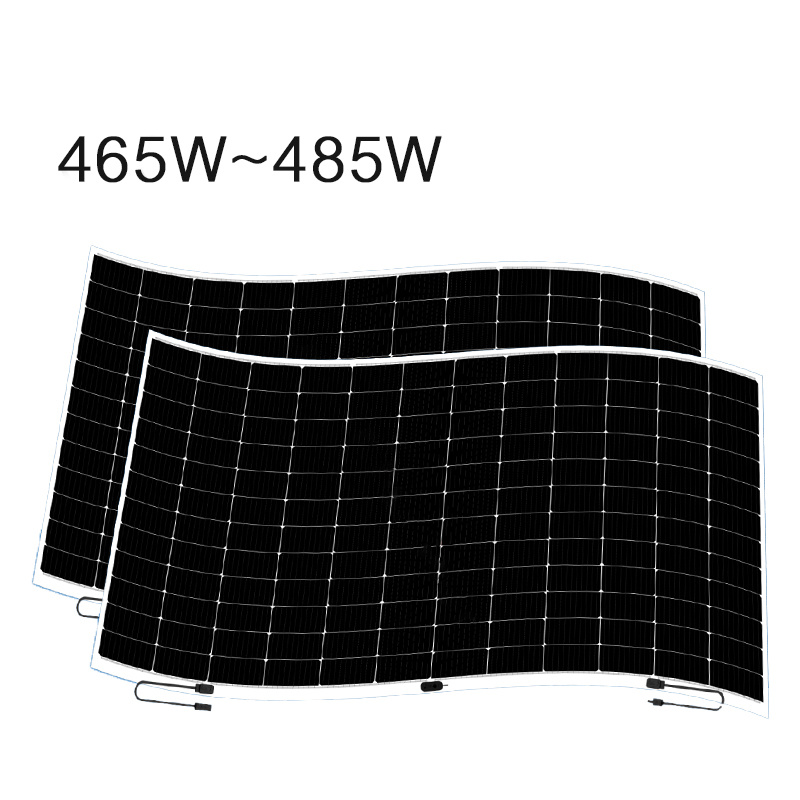
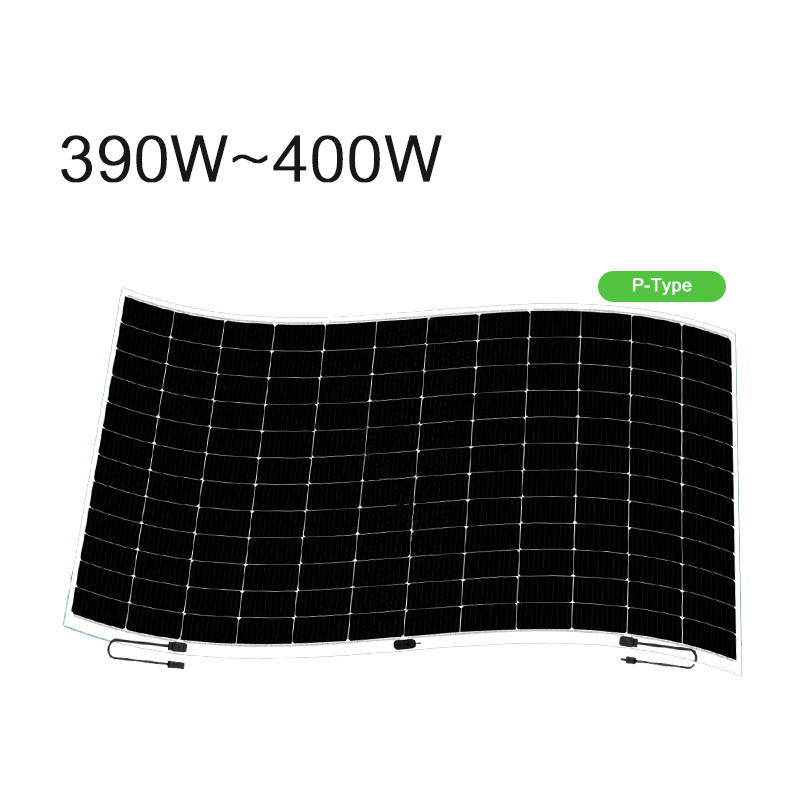
430-445W MONO-FLEXIBLE MODULE
The 430-445W MONO flexible PV module utilizes advanced N-type (TOPCon) cell technology, delivering higher power density and superior energy yield for commercial and industrial rooftops. It combines high output with exceptional structural strength.
Contact:
Details Introduction
Higher Power & Energy Yield
The N-type cells provide higher conversion efficiency and lower degradation, maximizing the overall ROI of your PV system.
Enhanced Mechanical Strength
Reinforced with resin-fiber technology, the module achieves a strength of 1300MPa, offering superior resistance against harsh weather and wind uplift for large-scale installations.
Seamless Integration
Designed for easy factory-integrated installation. It eliminates heavy traditional frames, drastically reducing labor costs and installation time on complex rooftops.
Long-Term Stability
Built with V0 flame-retardant materials and ultra-high UV blocking capability, ensuring sustained high performance for over 25 years.
Parameter
| Cell Type | Mono-crystalline 182 * 91mm |
| No.of cells | 120(12x10) |
| Dimensions | 2246*1020*2.5mm |
| Weight | 6.9Kg |
| Junction Box | IP68 Rated |
| Output Cables | 4.0 mm2 |
| Cable Length | 400 mm or Customized Length |
Keyword:
430-445W MONO-FLEXIBLE MODULE


Are Lightweight Solar Modules as Durable as Traditional Solar Panels?
Yes. High-quality lightweight modules use advanced composite materials and weather-resistant encapsulation to provide excellent mechanical strength, UV resistance, and long-term power generation performance in various outdoor environments.
Where Can Lightweight Solar Modules Be Installed?
Lightweight solar modules are widely used on commercial and industrial rooftops, metal roofs, curved roofs, warehouses, agricultural buildings, carports, and other structures with limited load-bearing capacity or complex installation requirements.
What Are the Advantages of Lightweight Solar Modules Compared to Conventional Solar Panels?
Lightweight solar modules are significantly lighter than traditional glass panels while maintaining high power output. They reduce roof load, simplify transportation and installation, and are ideal for projects where structural weight is a concern.

Contact us
Address: 5 Xingfu Road, Miaoshan Development Zone, Jiangxia District, Wuhan City, Hubei Province, China
Scan QR Code by WhatsApp