
U.S. Battery Manufacturing in 2026: How New Policies Are Shaping ESS Production and Factory Investment
Release time:2026-11-19
The U.S. battery manufacturing industry is entering a new stage of development. Growing demand for energy storage systems, changes in federal manufacturing policies, and new investments in domestic battery production are creating opportunities for manufacturers across the battery supply chain.
In 2026, the U.S. Department of Energy introduced a national battery strategy focused on strengthening domestic manufacturing capabilities, improving supply chain security, and advancing battery technology. At the same time, federal funding programs and manufacturing tax incentives are influencing how companies evaluate factory investments and production plans.
For businesses planning to enter or expand in the U.S. battery market, understanding these developments is important when assessing production capacity, equipment requirements, and long-term manufacturing costs.
1. U.S. Battery Demand Is Expected to Grow Significantly
According to the U.S. Department of Energy's national battery strategy, U.S. demand for batteries in transportation and stationary energy storage is projected to increase from approximately 179 GWh in 2025 to 707 GWh by 2035.
This growth is closely connected to two major markets:
Electric vehicles: Continued demand for EV batteries is supporting investment in domestic cell manufacturing.
Energy storage systems: The expansion of renewable energy and grid-scale storage is increasing demand for batteries used in ESS and BESS applications.
Energy storage is particularly important because battery systems are increasingly used to support renewable power generation, manage electricity demand, and improve grid flexibility. As the market develops, manufacturers will need production facilities capable of supplying different battery formats, capacities, and application requirements.

2. Federal Funding Supports Domestic Battery Manufacturing
In August 2026, the U.S. Department of Energy announced $500 million in funding for seven selected projects aimed at strengthening domestic critical mineral and battery supply chains.
The selected projects cover several areas, including:
- Critical mineral processing and material production
- Battery manufacturing capacity
- Battery recycling and material recovery
- Expansion and improvement of existing industrial facilities
This funding is part of broader efforts to develop a more integrated domestic battery supply chain, from raw material processing to battery production and recycling. For manufacturers, these investments indicate continued federal attention to domestic battery production. However, the funding is awarded to selected projects rather than being a general subsidy available to every company building a battery factory.
3. Section 45X Tax Credits and Manufacturing Investment
The Advanced Manufacturing Production Credit under Section 45X is another important policy for battery manufacturers operating in the United States. Under the current rules, eligible manufacturers may receive production tax credits for qualifying battery components:
| Eligible component | Tax credit |
|---|---|
| Battery cells | $35/kWh |
| Battery modules using battery cells | $10/kWh |
| Battery modules not using battery cells | $45/kWh |
These credits are intended to support domestic manufacturing of eligible components. Companies must meet the applicable production, sale, and other qualification requirements. Manufacturers should also pay attention to restrictions involving prohibited foreign entities and material assistance requirements. These rules may affect whether certain products qualify for tax credits, depending on the company's supply chain and production arrangements. Importantly, Section 45X is a production-based tax credit, not a direct subsidy for purchasing battery manufacturing equipment. Companies planning new facilities should evaluate eligibility alongside equipment investment, production costs, and supply chain arrangements.
4. U.S. Battery Factory Expansion: LG Energy Solution's Michigan Facility
Recent factory developments also demonstrate the growing importance of domestic battery production. In August 2026, LG Energy Solution announced the start of production at its Lansing facility in Michigan. The site covers approximately 226 acres and is designed to achieve an annual production capacity of more than 35 GWh at full operation.
The facility is planned to manufacture:
- LFP battery cells for energy storage systems (ESS)
- NMC battery cells for electric vehicle applications
The project reflects the increasing role of energy storage batteries in the U.S. manufacturing market, alongside traditional EV battery production. It is important to distinguish between planned capacity and actual output: the figure of more than 35 GWh represents the facility's target at full production, not its current operating output.

5. What Do These Developments Mean for ESS Battery Production Lines?
As investment in energy storage manufacturing grows, companies planning ESS battery factories need to consider more than battery cell supply. Production equipment, manufacturing efficiency, product consistency, and testing capabilities are also important parts of factory planning.
For manufacturers producing prismatic lithium battery systems, a typical ESS Module & PACK production process may include:
- Cell loading and sorting: Incoming battery cells are loaded and sorted according to production requirements.
- Cell stacking and positioning: Cells are arranged and positioned for module assembly.
- Busbar welding: Electrical connections are formed through suitable welding processes.
- Module assembly: Battery cells and structural components are assembled into modules.
- PACK integration: Modules are integrated with electrical and structural components to form battery PACKs.
- Testing and inspection: Finished products undergo electrical and quality inspections before delivery.
The equipment configuration depends on battery specifications, target production capacity, factory layout, and automation requirements. For example, a factory producing 314Ah prismatic ESS batteries may require a different production configuration from a facility manufacturing smaller battery PACKs for electric motorcycles or other applications.
Rated Products



6. Planning Battery Production Capacity for the U.S. Market
Before investing in a battery manufacturing facility, companies should evaluate several factors:
- Target application: Grid-scale energy storage, commercial and industrial ESS, or other battery applications.
- Battery specifications: Cell format, capacity, module design, and PACK configuration.
- Production capacity: Planned output, production speed, and future expansion requirements.
- Automation level: Labor availability, investment budget, and expected manufacturing efficiency.
- Factory conditions: Available space, power supply, workflow, and equipment installation requirements.
A well-planned production line should match the manufacturer's actual product requirements while allowing room for future capacity expansion.
Rated Products


7. ESS Battery Module & PACK Production Line Solutions
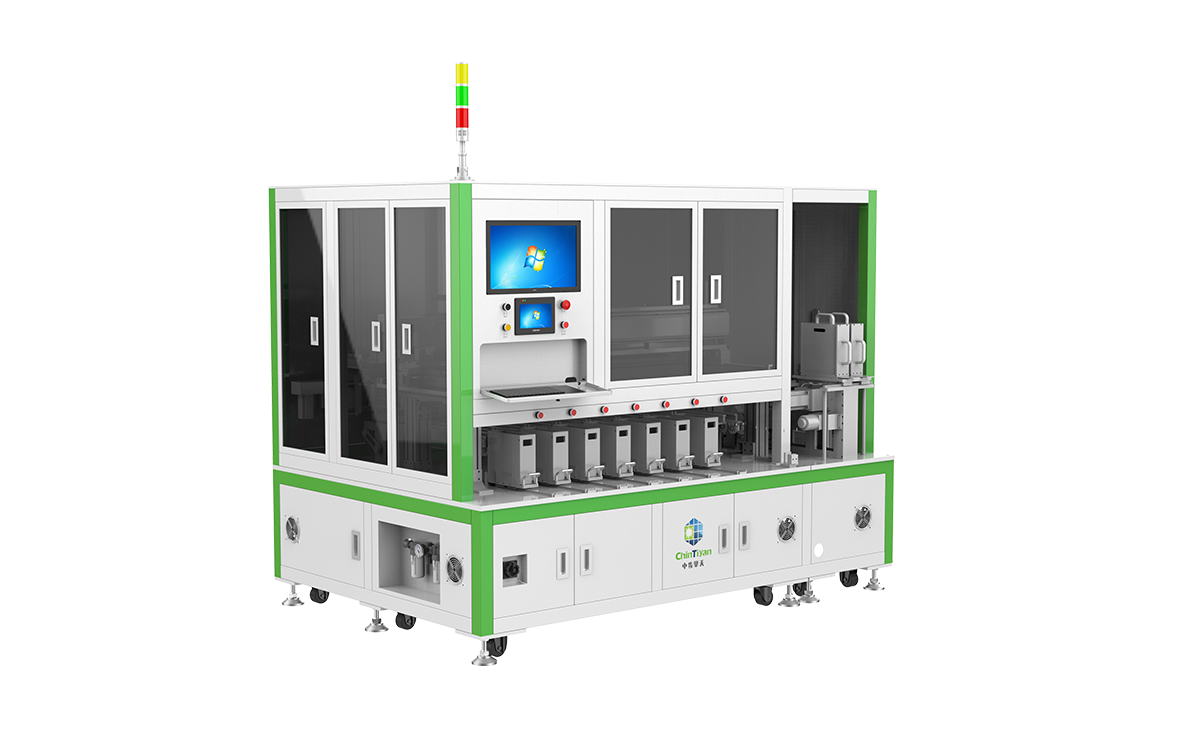
ChinTiyan provides lithium battery manufacturing equipment and production line solutions for energy storage battery applications, including prismatic ESS Module & PACK production. Solutions can be configured around different battery specifications, production capacities, and automation requirements, covering key processes from cell handling and module assembly to PACK integration and testing.
For companies planning a new ESS battery factory or upgrading an existing production facility, equipment selection should be based on the target battery design, expected output, and available factory conditions.

Planning an ESS battery production project in the United States? Contact ChinTiyan to discuss production line configuration, equipment selection, and manufacturing capacity planning.
Previous Page
Previous Page
Related News

Contact us
Address: 5 Xingfu Road, Miaoshan Development Zone, Jiangxia District, Wuhan City, Hubei Province, China
Scan QR Code by WhatsApp