Semi-Auto Laser Scribing
TC-20 Laser Scribing Machine: 156–210mm cells, ≥1600pcs/h cutting rate (bifacial), ≤±0.05mm accuracy, ≤2mm groove length, micro-damage technology
Contact:
Details Introduction
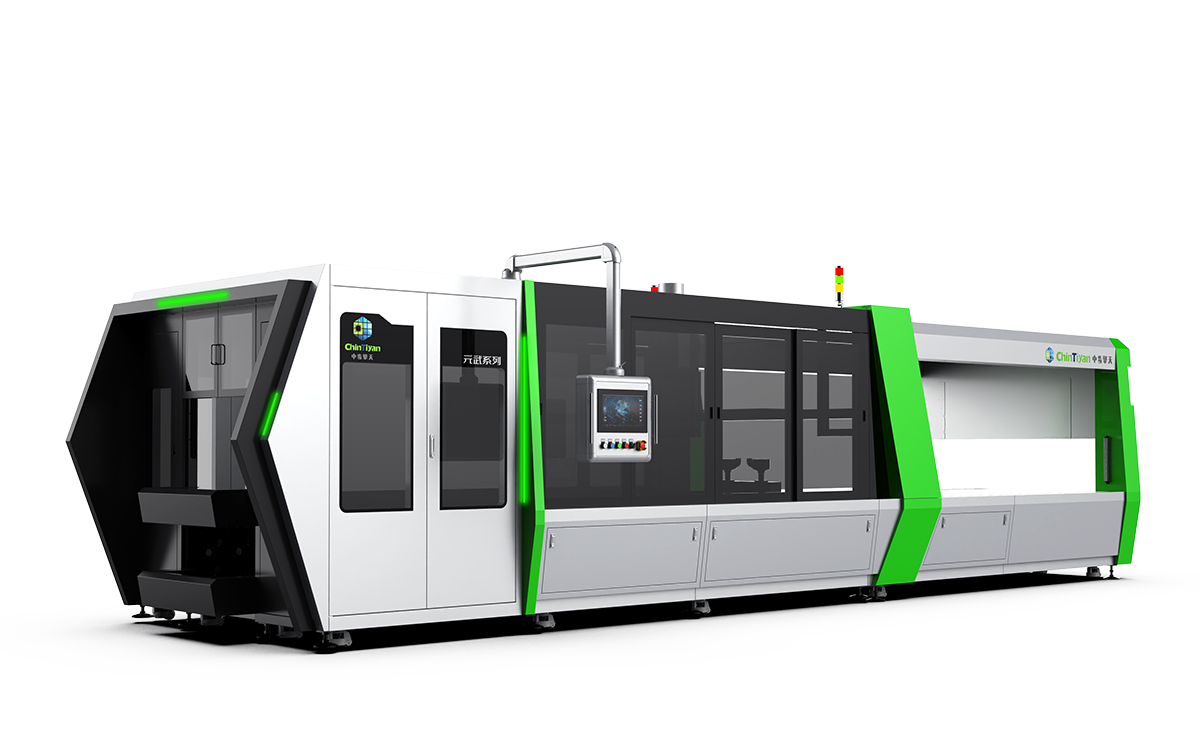
The CTC-20 Laser Scribing Machine is an automated production equipment for cutting crystalline sil-icon solar cells.It enables the cutting of solar cells and integrates various advanced automation technolo-gies such as motion control cards,sensors,servos,and laser machines,achieving fully automated pro-cessing from loading,scribing to unloading.
Designed capacity:156-210mm solar cells,with a cutting rate of≥1600pcs/h for bifacial slicing. Utilizing micro-damage cutting technology, it minimizes surface damage to solar cells and generates minimal dust during processing,with a small footprint and high processing efficiency.
Parameter
|
Laser grooving on aligned cells with groove length≤2mm. |
Cell conveyor transports cells to the CCD inspection station. |
|
Drying mechanism removes residual water stains from cell surfaces. |
Scribing cooling system. |
| Comprehensive positioning accuracy with deviation≤±0.05 mm. |
Non-destructive cutting technology minimizes surface damage to cells. |
Keyword:
Semi-Auto Laser Scribing
Related Products




What is the Solar Panel Manufacturing Process?
Cells are loaded by an automatic loader. For half‑cut or third‑cut, cells go through a laser scribing machine for precise splitting. The cells are then fed into a stringer, where ribbons are soldered to form cell strings. After stringing, a bussing machine interconnects the strings, followed by layup, lamination, framing, junction box attachment, and final testing (EL and flash test). The stringer machine and laser scribing machine are the most critical pieces, they determine breakage rate and soldering quality.
How to Calculate Annual Energy Production From Solar Panels?
Simply multiply the total panel power (in kW) by the annual peak sun hours in your location, then apply a system efficiency factor, typically around 80%, to get a rough estimate. But from a manufacturing equipment perspective, what matters just as much is ensuring that processes like stringing and lamination don’t introduce micro‑cracks or poor soldering, because those issues will directly reduce the panel’s actual output.
Is BC technology the Future?
BC (Back Contact) technology is undoubtedly a key direction for next-generation high-efficiency PV modules. Its busbar-free front side offers not only superior aesthetics but also significantly reduces shading, leading to higher light absorption and increased power output. Rather than simply declaring BC as the only future,In fact, BC is a platform technology that can be combined with techniques such as Topcon HJT and perovskite tandem cells to squeeze out the last drop of efficiency gains.
Therefore, we believe BC technology will remain at the forefront of the upcoming technological transformation, making now the opportune moment to invest in BC.
What is Your Collaboration and After-Sales Process?
From project discussion to stable production, we provide complete technical support and long-term after-sales service to ensure a smooth and efficient cooperation experience.
1. Requirement Discussion
We communicate with you in detail to confirm product specifications, production capacity, factory conditions, and technical requirements, then provide a suitable production line solution.
2. Solution Confirmation & Contract
After confirming the technical proposal, both parties finalize the equipment configuration, layout, delivery schedule, and commercial agreement.
3. Equipment Manufacturing
While your factory prepares utilities and workshop conditions, we carry out equipment production, assembly, and internal testing.
4. Factory Acceptance Test (FAT)
Before shipment, customers can inspect and test the production line at our factory to verify equipment performance and operating conditions.
5. Shipment & Installation
The equipment is shipped to your factory, and our engineers provide on-site installation guidance and positioning support.
6. Commissioning & Site Acceptance
After installation, our engineers complete commissioning, parameter adjustment, and final testing to ensure the line operates according to agreed standards.
7. Training & Trial Production
We provide operation and maintenance training for your team and assist with trial production until stable operation is achieved.
8. Long-Term Technical Support
We provide continuous after-sales support, including remote assistance, spare parts supply, troubleshooting, technical upgrades, and maintenance support to ensure long-term stable production.

Contact us
Address: 5 Xingfu Road, Miaoshan Development Zone, Jiangxia District, Wuhan City, Hubei Province, China
Scan QR Code by WhatsApp