
Auto Layup and Bussing Machine
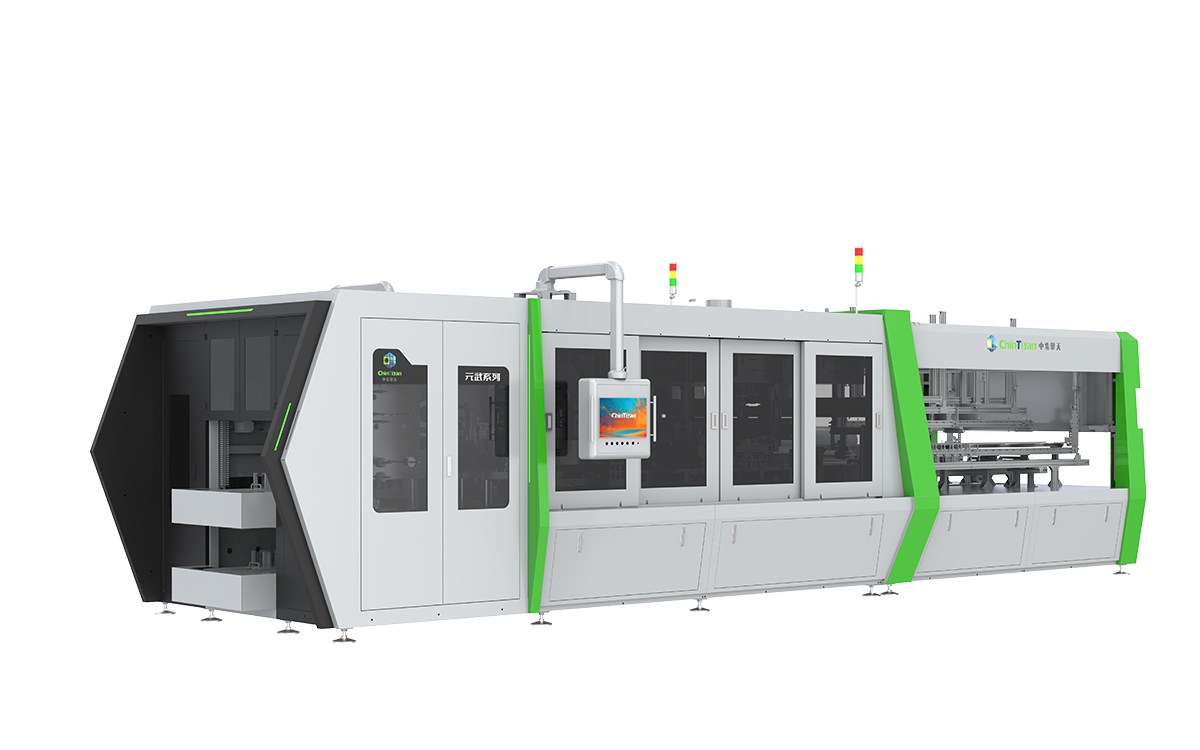
CT-J-HLH-00 automatic layup and bussing machine, compact footprint, beat >6s/string, customizable, for small/medium module factories.
Contact:
Details Introduction
The CT-J-HLH-00 Automatic Layup and Bussing Machine is designed for small and medium-sized PV module factories, integrating solar module layup and bussing processes into a compact automated system. The machine automatically transfers and positions cell strings, arranges them on the module glass according to the preset layout, and completes the corresponding bussing and welding process. By combining a motion control system, sensors, servo drives, welding heads, linear modules, and rack-and-pinion mechanisms, the automatic layup machine provides precise positioning and stable operation while reducing manual handling in the PV module production process.
As an integrated automatic layup and bussing machine, CT-J-HLH-00 helps streamline the transition from cell string feeding to module layup and string interconnection. The layup configuration can be customized according to different module designs and production requirements, making the equipment suitable for various solar module production line configurations. With a production takt of more than 6 seconds per string, the machine provides efficient and consistent operation for small and medium-sized module manufacturing facilities while minimizing floor space requirements. It can be integrated into semi-automatic or automated PV module production lines to improve production efficiency, positioning accuracy, and process consistency.
Parameter
| Auxiliary string loading. |
Three-axis module and vacuum suction cups moving the strings to alignment and tabbing positions. |
|
Cylinder alignment with laser sensors for positioning via front and rear screw modules. |
Full platform tabbing with adsorption to ensure precise string positioning for the next station. |
|
Three Busbar Auto layup and bussing stations with fast bending,maintaining a ready state. |
Six welding heads operating simultaneously, to ensure efficient welding cycles. |
Keyword:
Auto Layup and Bussing Machine
Related Products




What is the Solar Panel Manufacturing Process?
Cells are loaded by an automatic loader. For half‑cut or third‑cut, cells go through a laser scribing machine for precise splitting. The cells are then fed into a stringer, where ribbons are soldered to form cell strings. After stringing, a bussing machine interconnects the strings, followed by layup, lamination, framing, junction box attachment, and final testing (EL and flash test). The stringer machine and laser scribing machine are the most critical pieces, they determine breakage rate and soldering quality.
How to Calculate Annual Energy Production From Solar Panels?
Simply multiply the total panel power (in kW) by the annual peak sun hours in your location, then apply a system efficiency factor, typically around 80%, to get a rough estimate. But from a manufacturing equipment perspective, what matters just as much is ensuring that processes like stringing and lamination don’t introduce micro‑cracks or poor soldering, because those issues will directly reduce the panel’s actual output.
What is Your Collaboration and After-Sales Process?
From project discussion to stable production, we provide complete technical support and long-term after-sales service to ensure a smooth and efficient cooperation experience.
1. Requirement Discussion
We communicate with you in detail to confirm product specifications, production capacity, factory conditions, and technical requirements, then provide a suitable production line solution.
2. Solution Confirmation & Contract
After confirming the technical proposal, both parties finalize the equipment configuration, layout, delivery schedule, and commercial agreement.
3. Equipment Manufacturing
While your factory prepares utilities and workshop conditions, we carry out equipment production, assembly, and internal testing.
4. Factory Acceptance Test (FAT)
Before shipment, customers can inspect and test the production line at our factory to verify equipment performance and operating conditions.
5. Shipment & Installation
The equipment is shipped to your factory, and our engineers provide on-site installation guidance and positioning support.
6. Commissioning & Site Acceptance
After installation, our engineers complete commissioning, parameter adjustment, and final testing to ensure the line operates according to agreed standards.
7. Training & Trial Production
We provide operation and maintenance training for your team and assist with trial production until stable operation is achieved.
8. Long-Term Technical Support
We provide continuous after-sales support, including remote assistance, spare parts supply, troubleshooting, technical upgrades, and maintenance support to ensure long-term stable production.
What Are Photovoltaic Panels Made of?
A photovoltaic solar panel is a laminated assembly of five essential layers: the front is high-transmittance tempered glass, followed by an encapsulant layer (typically EVA or POE) that bonds and protects, then the solar cells which generate electricity, another encapsulant layer, and finally a backsheet that seals the rear surface. For bifacial modules, the backsheet is replaced with transparent glass or fluoropolymer film to capture energy from both sides. The entire stack is fused together under heat and vacuum in solar panel laminator—a critical stage in the pv panel manufacturing process, then framed with anodized aluminum and fitted with a junction box.

Contact us
Address: 5 Xingfu Road, Miaoshan Development Zone, Jiangxia District, Wuhan City, Hubei Province, China
Scan QR Code by WhatsApp