
How to Set up a Lithium Battery Pack Production Line?
Release time:2026-08-21
1. Cell Inspection and Sorting
Cell inspection is an important quality-control stage at the beginning of the manufacturing process. Before entering assembly, incoming cells need to be checked for their physical condition and key electrical characteristics.
Visual inspection can identify damaged casings, deformation, leakage, or other visible defects. Electrical testing can check parameters such as open-circuit voltage and internal resistance, while qualified cells can be grouped according to their specifications and consistency requirements.
For automated production, cell inspection and sorting equipment can reduce manual handling and improve consistency when processing large quantities of cells. Terminal cleaning can also be introduced when required to remove contaminants and provide a cleaner surface for subsequent welding.
2. Cell Loading and Module Assembly
After inspection and sorting, qualified cells are transferred to the module assembly section. The handling and positioning method depends largely on the cell format and module design. Automatic loading systems and robotic handling equipment can position cells according to the required arrangement. Depending on the module structure, this stage may also include cell alignment, compression, clamping, and the installation of end plates or side plates.Accurate cell positioning provides the foundation for subsequent welding and electrical connection. Vision systems can be integrated into automated equipment to verify cell positions and improve assembly consistency.

3. Module Welding and Electrical Connection
Welding is a critical stage in the lithium battery pack manufacturing process, as the quality of electrical connections directly affects module performance and reliability. Laser welding is widely used for battery module assembly because it provides precise and repeatable connections with controlled heat input. Depending on the module design, welding may involve cell terminals, busbars, CCS components, or other conductive parts.
Stable positioning and welding parameters are essential for maintaining consistent weld quality. For manufacturers producing different battery models, flexible tooling and programmable welding systems can also simplify product changeovers. Vision positioning and welding monitoring can provide additional process control.
4. Module Testing and Inspection
After mechanical assembly and welding, the completed module needs to be inspected before moving to final PACK assembly. Testing at this stage helps identify potential problems before they become part of the finished battery.
The required checks depend on the module structure and application, but may include voltage, insulation resistance, electrical connections, welding quality, and visual inspection. Integrating inspection equipment into the production process allows manufacturers to identify problems earlier and reduce the risk of defective modules entering the final assembly stage.
5. Battery PACK Final Assembly
Once the module has passed the required inspections, it can be integrated into the final battery PACK. This stage connects the completed module with the enclosure, BMS, wiring, connectors, and other supporting components.
Depending on the PACK design, the process may include module installation, BMS installation, high- and low-voltage wiring, connector installation, cooling component installation, and enclosure assembly. Fastening and torque control can also be incorporated where required.
The level of automation can be adjusted according to production volume and product complexity. Semi-automatic solutions can provide flexibility for smaller production volumes or frequent model changes, while automated handling and assembly systems can improve throughput for higher-volume manufacturing.


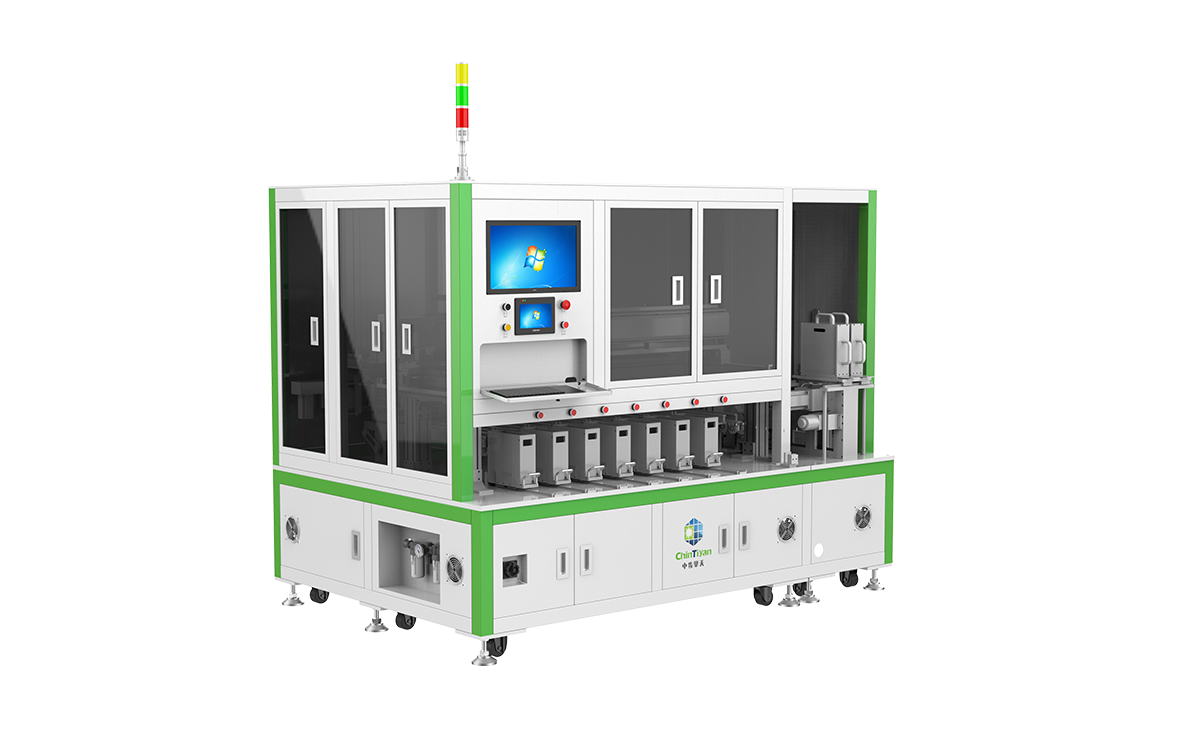
6. EOL Testing
End-of-Line (EOL) testing provides the final verification stage of the lithium battery pack manufacturing process. It checks whether the completed PACK meets the required electrical, safety, and functional specifications before shipment. Depending on the application and customer requirements, EOL testing may include voltage and electrical parameter checks, insulation resistance, BMS communication, high-voltage safety, and other functional tests. Charge and discharge performance testing can also be incorporated when required by the product specification.By completing these checks before shipment, manufacturers can identify electrical or functional issues and improve the reliability of finished battery PACKs.
7. Automation and Production Traceability
As battery PACK manufacturing moves toward higher levels of automation, production control and data traceability are becoming increasingly important. Automated material handling, robotic assembly, vision inspection, and production data collection can be integrated according to the required production capacity.
For larger production systems, MES integration can connect process data with individual cells, modules, or finished PACKs through barcode or QR-code tracking. This provides greater visibility into production history and makes it easier to identify quality issues and monitor process performance.
Building an Efficient Battery PACK Manufacturing Setup
A suitable lithium LiFePO4 battery pack manufacturing process should be designed around the actual cell format, PACK structure, production capacity, and automation requirements rather than simply maximizing the number of automated machines. A complete setup may combine cell handling, module assembly, laser welding, inspection, and final PACK testing into a connected production workflow. Semi-automatic configurations can provide greater flexibility for smaller production volumes, while fully automated systems can support higher-volume manufacturing.
The key is to ensure that each stage works together efficiently, from cell preparation and module assembly to final PACK testing. With the right equipment configuration and process control, manufacturers can achieve more consistent quality, higher production efficiency, and better production traceability.
Previous Page
Next Page
Previous Page
Next Page

Contact us
Address: 5 Xingfu Road, Miaoshan Development Zone, Jiangxia District, Wuhan City, Hubei Province, China
Scan QR Code by WhatsApp